A commercial account differs from a one-off rental in one thing: repeat work is set up once and re-ordered fast. Contractors framing houses in Gatewood or gutting a rowhouse in Mesta Park pull the same 20-yard again…
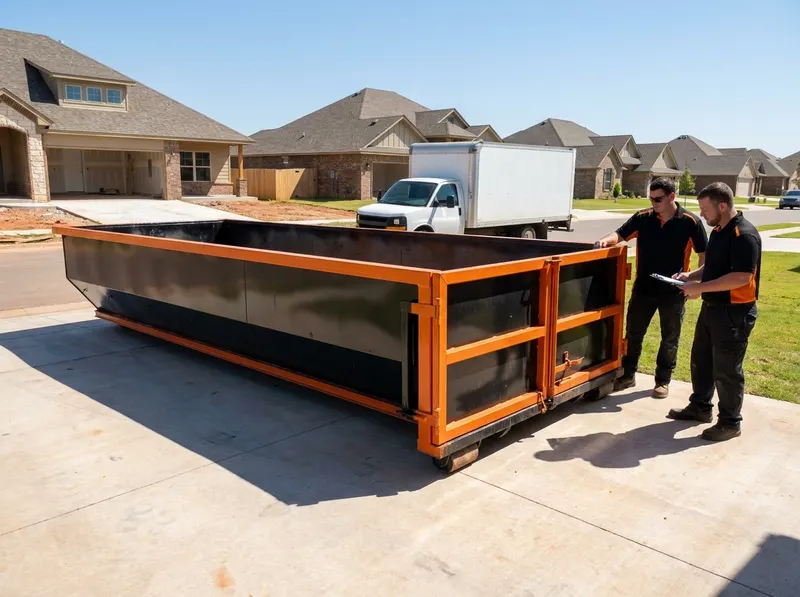
A commercial account differs from a one-off rental in one thing: repeat work is set up once and re-ordered fast. Contractors framing houses in Gatewood or gutting a rowhouse in Mesta Park pull the same 20-yard again and again, so the account holds the size, the site address, and the flat rate on file. Ordering the next can is a phone call, not a new quote. The five sizes stay fixed for account holders, 10-yard $595, 15-yard $650, 20-yard $695, 30-yard $795, 40-yard $895, and each figure already covers delivery, pickup, and dump weight for that size.
Size choice on a job site follows the debris, not the square footage. A 10-yard holds roughly four pickup-truck loads and suits a single-bathroom remodel or a small punch-list cleanout. A 20-yard runs about eight pickup loads and fits most kitchen gut-jobs and mid-size roofing tear-offs. A 30-yard and 40-yard carry bulk framing lumber, siding, and full-house demolition debris. The trade-off is footprint against volume: a 40-yard needs open lot or driveway space and clear overhead, while a 10-yard tucks onto a tight Deep Deuce infill lot or a Bricktown alley without blocking access. Heavy, dense loads, concrete, brick, dirt, roofing shingles, belong in the 10-yard or 15-yard because weight, not space, fills them first. Light, bulky demo goes in the 30-yard or 40-yard.
A dumpster rental is not junk removal, the crew drops the can and the site loads it. That is the point on a commercial account: the box stays on the Midtown or Capitol Hill lot for the duration and swaps out full for empty on request, so trades keep working instead of waiting on a hauler. Recurring drops can be scheduled ahead for phased jobs, and swaps on an active site are usually same-day when called before the afternoon. Placement on a public street in dense areas like The Paseo or Crown Heights can require an Oklahoma City right-of-way permit; drops on private property, a driveway, or a fenced job site in Nichols Hills or Belle Isle do not. The crew flags which applies before delivery.
Billing is per drop at the flat size rate, a 30-yard on a Bricktown build is $795 whether it comes back light or loaded to the fill line, with no surprise weight ticket at pickup. Overloaded above the rim or past the safe road-weight limit is the one exception: a can loaded above the top rail cannot be hauled legally and must be lightened before pickup. For a job that outruns one can, ordering the next size up costs less per cubic yard than stacking two small drops.
Every job gets a firm, written price after a free on-site visit.
Tell us about your commercial & contractor accounts job in Oklahoma City and we'll send a clear, written quote, usually the same day.
 Grizzly Dumpster Rental